




























From Snana Purnima to Niladri Bije, every observance represents a stage in humanity’s own journey from purification to healing, from renewal to service, from separation to reunion and ultimately from the temporal to the eternal. This seamless integration of scientific understanding, philosophical inquiry, spiritual wisdom and social ethics is the enduring greatness of Jagannath culture.
Among the world’s living spiritual traditions, few embody such a remarkable synthesis of science, philosophy, spirituality, culture and social ethics as the Jagannath tradition of Odisha. While the spectacular Rath Yatra is recognised globally, the complete annual cycle of rituals from Snana Purnima to Niladri Bije reveals a profound philosophy of life. Each observance offers timeless insights into health, psychology, ecology, ethics and harmonious living. Rooted in indigenous tribal traditions and enriched by Vedic, Vaishnava, Shaiva, Shakta, Buddhist and Jain thought, Jagannath culture has evolved into a universal tradition where divinity embraces humanity without distinction. Many of its ancient practices remarkably resonate with modern science, showing how traditional wisdom and scientific understanding can complement one another.
The sacred journey begins with Snana Purnima, when Lord Jagannath, Lord Balabhadra, Devi Subhadra and Sudarshana are ceremonially bathed with 108 pitchers of sanctified water. Spiritually, the ritual signifies purification before a higher journey. Philosophically, it teaches that true purity includes the body, mind, character and conduct. Scientifically, the ceremony coincides with the onset of the monsoon, when the risk of infectious diseases traditionally increases. Its emphasis on ritual bathing reflects an intuitive understanding of hygiene and preventive health. By portraying the Divine as sharing this experience, Jagannath culture teaches humility and the universality of nature’s laws.
Following the ceremonial bath comes Anasara, during which the deities remain away from public view, symbolically recovering from illness. This observance reflects an extraordinary appreciation of rest and recuperation. Modern medicine recognises that adequate recovery strengthens immunity, while chronobiology explains how living organisms adapt to seasonal rhythms. Psychologically, Anasara nurtures patience, emotional resilience and unwavering faith. Spiritually, it encourages inner contemplation, reminding devotees that the Divine is experienced not only through sight but also through sincere devotion and self-reflection.
The Lord reappears during ‘Nava-Jaubana Darshan’, radiating renewed youth and vitality. This transformation symbolises nature’s universal principle of regeneration. Biology teaches that life survives through continuous repair and renewal, while Indian philosophy affirms that although the body changes, the inner self remains eternal. The ritual inspires hope by reminding humanity that every period of adversity is followed by fresh beginnings.
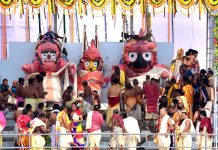
The magnificent Rath Yatra is the most visible expression of Jagannath philosophy. Unlike many religious traditions where devotees approach the deity, Lord Jagannath comes out to meet the people, affirming that the Divine belongs equally to everyone irrespective of caste, creed, language, gender or social status. The procession symbolises life’s journey, with the body serving as the chariot and wisdom guiding its course. Ancient Indian philosophy compares disciplined senses to horses drawing the chariot towards its destination, a metaphor that continues to inspire ethical living.
Modern behavioural science shows that collective rituals strengthen trust, cooperation and emotional wellbeing. Thousands of devotees pulling the massive chariots together demonstrate the power of shared purpose and collective responsibility. The ropes binding countless hands become enduring symbols of unity in diversity, illustrating that lasting progress is achieved through cooperation rather than individual effort alone.
The Lord’s stay at the Gundicha Temple, traditionally regarded as a visit to His birthplace or maternal home, conveys another timeless lesson. Greatness never demands separation from one’s roots. Contemporary psychology recognises that family bonds, cultural identity and a sense of belonging are essential for emotional wellbeing. Spiritually, the episode reflects divine simplicity and accessibility, while socially it reinforces affection, humility and community cohesion.
The observance of Hera Panchami, when Goddess Lakshmi symbolically expresses her displeasure at Lord Jagannath’s prolonged absence, offers profound insights into human relationships. Rather than portraying conflict, the ritual celebrates communication, emotional expression and reconciliation. Modern psychology recognises these qualities as the foundation of healthy relationships, while the spiritual tradition interprets the episode as divine leela, illustrating that love flourishes through empathy, patience and mutual understanding. It reminds society that enduring families and communities are sustained by respect, trust and dialogue.
The Bahuda Yatra, marking the Lord’s return to the Jagannath Temple, conveys the timeless truth that every outward journey ultimately returns to its source. Nature itself follows recurring cycles of day and night, changing seasons, birth and renewal. Spiritually, Bahuda symbolises the soul’s homecoming after fulfilling its earthly responsibilities. Philosophically, it teaches that outward achievements gain lasting meaning only when accompanied by inner growth. Socially, it celebrates reunion, reconciliation and the restoration of harmony.
During the return journey, Lord Jagannath visits the Mausi Maa Temple, where He is lovingly offered Poda Pitha, one of Odisha’s cherished traditional delicacies. Beyond its devotional significance, this ritual honours indigenous food heritage and the wisdom embedded in traditional food systems. Developed in harmony with local climate and seasonal availability, such foods reflect generations of practical knowledge. Spiritually, the offering affirms that devotion is measured by sincerity rather than extravagance, while socially it preserves cultural identity and promotes sustainable food traditions.
The resplendent Suna Besa, during which the deities are adorned with magnificent gold ornaments, symbolises prosperity tempered by responsibility. Gold represents purity, stability and abundance, yet Jagannath philosophy reminds us that wealth becomes meaningful only when guided by compassion, justice and ethical conduct. The spectacle inspires gratitude rather than attachment, encouraging prosperity to be viewed as a means of serving humanity.
The sacred cycle culminates in Niladri Bije, when the deities re-enter the sanctum after Goddess Lakshmi symbolically welcomes Lord Jagannath through the offering of Rasagola. Beneath this charming tradition lies a profound lesson in forgiveness, empathy and reconciliation.
Behavioural science shows that emotional intelligence and forgiveness strengthen relationships and communities. Spiritually, Niladri Bije represents the restoration of harmony, while philosophically it teaches that enduring relationships flourish through understanding rather than ego.
Viewed as a whole, Jagannath culture is far more than a collection of rituals. The sharing of Mahaprasad dissolves barriers of caste and status, affirming the equality and dignity of all. The unfinished wooden forms of the deities remind humanity that true perfection lies beyond external appearance. The sacred tradition of Nabakalebara, in which the deities periodically assume new wooden forms, symbolises the immortality of the soul amid the impermanence of the body. The careful selection of sacred Daru or neem trees also reflects ecological wisdom, respect for biodiversity and sustainable use of natural resources.
Remarkably, the Jagannath tradition embodies principles now recognised by modern science. Its observances follow seasonal rhythms that support health, its emphasis on cleanliness and recovery reflects sound public health practices, and its ecological values resonate with the contemporary One Health concept, which recognises the interdependence of human, animal and environmental health. Collective rituals strengthen emotional resilience, social cohesion and shared responsibility, illustrating a systems approach in which personal wellbeing, community harmony and environmental balance reinforce one another.
In an age challenged by climate change, environmental degradation, mental stress and social fragmentation, the Jagannath tradition offers enduring relevance. Its emphasis on inclusiveness, compassion, sustainable living and community participation remains as meaningful today as it was centuries ago. As one of India’s finest expressions of living cultural heritage, it also serves as a bridge between cultures, demonstrating how ancient traditions can contribute to public health, environmental stewardship, ethical living and peaceful coexistence.
From Snana Purnima to Niladri Bije, every observance represents a stage in humanity’s own journey from purification to healing, from renewal to service, from separation to reunion and ultimately from the temporal to the eternal. This seamless integration of scientific understanding, philosophical inquiry, spiritual wisdom and social ethics is the enduring greatness of Jagannath culture. More than the sacred heritage of Odisha, it is a living civilisational philosophy that continues to guide humanity towards harmony with nature, equality among people, ethical living and spiritual fulfilment. Its timeless message reminds us that science and spirituality, tradition and modernity, and individual wellbeing and collective welfare are not opposing forces but complementary paths towards a more compassionate, sustainable and enlightened world.