

























An electoral roll is the foundation upon which the right to vote is exercised. If an eligible citizen’s name is deleted, or a genuine new voter faces an unreasonable barrier to registration, the consequence can extend beyond administration to the exercise of a fundamental democratic right.
With the Election Commission itself coming under a question mark, India’s electoral democracy has entered a period of intense scrutiny. The controversy is not merely about allegations made by political parties against the Election Commission of India (ECI). It has been fuelled by a report based on objections reportedly recorded by two Election Commissioners themselves.
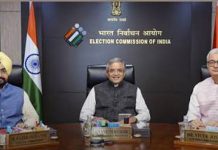
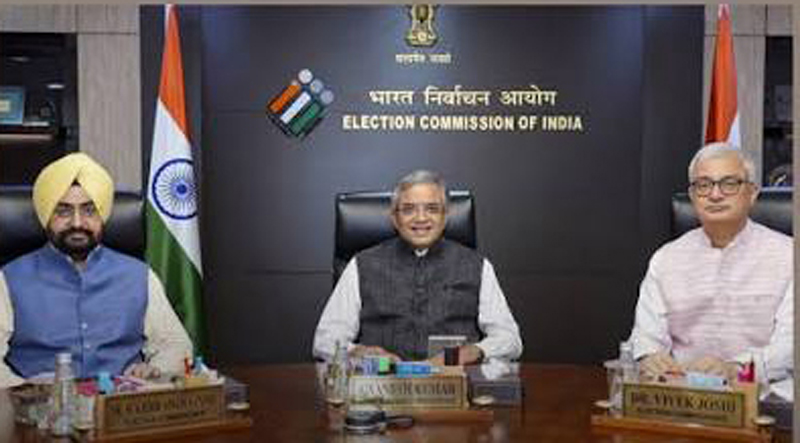
An investigation published by a leading national English daily reported that Election Commissioners Sukhbir Singh Sandhu and Vivek Joshi had formally raised objections at least 14 times over a period of about ten months concerning decisions and processes connected with the Special Intensive Revision (SIR) of electoral rolls. According to the report, some decisions and orders were taken without their knowledge or prior consultation. The objections reportedly concerned voter additions and deletions, changes to Form 6, and the centralisation and control of electoral-roll data.
The significance of the report lies not simply in the existence of differences within the three-member Commission. Differences are not unknown in constitutional institutions. The deeper question is whether the three-member Election Commission is functioning collectively, transparently and in accordance with the safeguards intended to prevent excessive concentration of authority.
What the Report Revealed
One of the most consequential issues concerns Form 6, which is used by citizens seeking inclusion in the electoral roll as new voters.
The report said that a new declaration was added to the online form, asking applicants whether their own name, or that of a parent or grandparent, appeared in the electoral roll prepared during the previous SIR. The report further said that although the additional section was not formally marked as mandatory, an applicant could not proceed with the online submission without answering it.
According to the report, Election Commissioner Vivek Joshi had recorded objections in May, arguing that the change could not be made without amending the relevant statutory rules. The report said that both Joshi and Sandhu subsequently objected to aspects of the process.
Another major concern reported by the newspaper relates to the centralisation of electoral-roll data and software control. The two Commissioners reportedly expressed concern that centralised systems could diminish the role of officials functioning at the state and constituency levels. The newspaper also reported that they had raised concerns about the integrity of the voter-roll software.
These are not minor administrative questions. An electoral roll is the foundation upon which the right to vote is exercised. If an eligible citizen’s name is deleted, or a genuine new voter faces an unreasonable barrier to registration, the consequence can extend beyond administration to the exercise of a fundamental democratic right.
The report, besides raising questions about the democratic functioning of the ECI, has also pointed to allegations of excessive authority being exercised by CEC Gyanesh Kumar. Under the constitutional framework, the CEC is the head, but ‘first among equals’ of the three-member Election Commission. Questions have therefore been raised about whether decisions of such significance were taken through a genuinely collective process rather than through unilateral action.
The Election Commission’s Defence
The Election Commission has rejected the interpretation that there was a formal institutional split or that the CEC acted unilaterally.
According to the ECI, the observations made by the two Election Commissioners were considered and decisions relating to SIR were taken unanimously. It has also said that all three Commissioners approved the relevant decisions.
The Commission subsequently issued a detailed clarification after a full-house meeting. The BJP cited this clarification as evidence that the controversy had been settled. TDP chief N. Chandrababu Naidu also referred to the clarification as reaffirming the credibility of the constitutional institution.
Therefore, two competing narratives now exist. One is based on the internal objections reported by the newspaper; the other is the ECI’s assertion that its final decisions were unanimous.
That difference itself deserves public scrutiny.
Why the Controversy Has Become Political
The controversy has erupted against the backdrop of an already bitter political dispute over SIR and allegations of manipulation of electoral rolls.
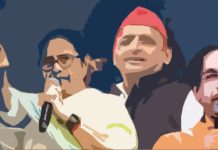
Opposition parties have for months questioned the process of voter-list revision. Following the latest report, the Congress and several other opposition parties intensified their demand for CEC Gyanesh Kumar’s resignation or removal. Congress leader Rahul Gandhi alleged that electoral processes were being compromised and demanded Kumar’s resignation.
The Cockroach Janata Party (CJP) separately demanded Kumar’s resignation within 48 hours and threatened a nationwide campaign.
The opposition’s argument has now acquired a new dimension. Earlier, criticism was directed principally at the Election Commission as an institution. The reported internal objections have enabled opposition parties to ask a different question: was the entire Commission involved in important decisions, or did the office of the CEC acquire disproportionate control?
That question remains politically contested and cannot be treated as an established fact merely because allegations have been made.
Even NDA Allies Seek Answers
Perhaps the most significant political development has been the response from parties supporting the Narendra Modi government.
Leaders of the TDP, LJP (Ram Vilas) and other NDA allies initially sought clarification from the Election Commission. Chirag Paswan said that doubts about the electoral process could become problematic if they caused people to lose confidence in elections. TDP leaders similarly called for clarification to dispel public misgivings.
This is important because electoral legitimacy cannot depend only on whether the government or the opposition accepts an election result. It depends on whether citizens believe that the institution conducting the election is functioning impartially and transparently.
The BJP, meanwhile, has defended the Election Commission and maintained that the controversy has been adequately addressed by the Commission’s clarification.
The Supreme Court Enters the Picture
The controversy has now moved beyond political statements and into the constitutional arena.
On September 29, the Supreme Court agreed to hear a petition questioning the functioning of CEC Gyanesh Kumar and challenging the nationwide SIR process. The petition specifically referred to the reported differences between Kumar and the other two Commissioners and questioned whether the constitutional requirement of collective decision-making had been properly followed.
The Court’s examination could therefore become important not merely for the immediate SIR controversy but also for a larger constitutional question: how should a multi-member Election Commission function when its members disagree over matters affecting the electoral roll?
The Real Issue Is Public Confidence
The most worrying aspect of the controversy is not that Election Commissioners may disagree. Institutional disagreement can actually be a sign of a functioning system of checks and balances.
The concern arises when citizens are left uncertain about who took a decision, who approved it, whether dissent was properly considered, and whether statutory procedures were followed.
An election is ultimately a matter of public trust. Votes are counted only after voters first trust the electoral roll, the polling process, the machinery conducting the election and the institution declaring the result.
The current controversy therefore demands more than political accusations and counter-accusations.
The Election Commission should place before the public, to the extent legally permissible, a clear account of the decisions questioned by the two Commissioners: what was proposed, what objections were raised, how those objections were considered, who authorised the final decisions and under what statutory authority.
If the Commission’s position is that every decision was unanimous, the documentary record should make that position understandable.
If the objections were merely administrative observations and not dissent, that too should be explained. And if there were genuine differences, citizens deserve to know how the constitutional safeguards for collective decision-making operated.
India’s democracy is too important to allow questions about its electoral machinery to remain buried beneath political rhetoric.
The issue is ultimately bigger than Gyanesh Kumar, the BJP, the Congress, SIR or any individual election.
The question before the country is whether every eligible citizen can continue to believe that his or her vote will be registered, protected and counted through a process whose fairness is beyond reasonable doubt.
That confidence cannot be demanded from citizens. It has to be earned by institutions through transparency, accountability and demonstrable adherence to the law.