

























Odisha is rising again, and its future rests on the foundations of its people and progress. The blueprint for the next decade must involve women-led growth, world-class education, and the preparation of a tech-savvy, skilled workforce. History must stop being a “once upon a time” story and start being a “blueprint for the future.”
The calendar marks a significant countdown. Exactly ten years remain until a monumental milestone: 2036, the centenary of modern Odisha’s statehood. On April 1, 1936, Odisha emerged as the first state in pre-independent India to be formed on a linguistic basis—a victory for a unique identity, a storied language, and decades of relentless struggle.
As this ten-year window opens, every Odia must confront a vital question: Is this merely a celebration of a date, or is it a moment to honor a civilizational legacy that once dictated the terms of trade and culture across the Indian Ocean?
The Maritime DNA: When the Ocean Was a Highway
Long before the term “globalization” was coined, and before the modern concept was even born, the sailors of Kalinga had already mastered it. They did not merely observe the Kalinga Sagar (Bay of Bengal); they commanded it. From ancient ports like Tamralipti and Palur, massive ships sailed toward Bali, Java, Sumatra, Sri Lanka, and other parts of Southeast Asia.
This was more than commerce; it was a profound export of ideas. The architecture of Southeast Asia, the scripts of their languages, and the very fabric of their culture still bear the thumbprints of Kalinga. Today, the state’s 575 km coastline remains its greatest strategic asset. Regardless of political shifts, there is a necessity to capitalize on this geography, building ports and welcoming industries that do not just export minerals but revive the ancient maritime spirit with Southeast Asian nations, East Asian nations, and even Pacific countries.
Engineering Marvels Etched in Stone
Odisha’s history is not confined to textbooks; it is etched in stone, rooted in a deep blend of culture and science. The mathematical perfection and artistic miracles built over centuries must now be projected onto the global stage.
The state possesses unique festivals and open-air theater traditions like the Dhanu Jatra and Bali Jatra that are rare global treasures. There is a massive opportunity to tap into the growing international tourism market by showcasing this rich heritage. The goal should be clear: expanding the list of UNESCO Tangible Heritage sites and ensuring that the Rath Jatra and other iconic festivals are recognized for their intangible cultural value. From the biodiversity of Bhitarkanika to the ecosystem of Chilika, Odisha’s natural zones are world-class assets waiting for a global audience, capable of providing a major boost to the state’s economy.
The Inspirational Figure: A Father of the Land
Every great civilization has a leader who defines its spirit and passes inspiration down through the generations. For the Marathas, that figure is Chhatrapati Shivaji Maharaj. For the Odia people, that figure is Gajapati Kapilendra Deva.
In the 15th century, while much of India struggled under foreign invasions, Kapilendra Deva stood as the strongest Hindu ruler of his time. He founded the Suryavamsi dynasty and expanded the empire from the Ganges in the north to the Cauvery in the south, reviving a falling kingdom and ensuring its dominance for another 150 years.
He was more than a military genius; he was the architect of an Odia Renaissance. He broke the monopoly of the elite by promoting Odia literature and poetry, giving the common man a sense of ownership over the land. His legacy is a reminder that the Odia spirit does not bow—it leads. It is time to embrace this historical culture and contribute to the grand task of nation-building.
The Paradox of Poverty and the 2036 Awakening
How did a land of such immense cultural, military, and intellectual wealth become known in recent decades as one of the poorest? Somewhere along the timeline, the “Lion Seed” went to sleep. A “silent state” became the norm. The world forgot the engineers who built the wheels of Konark and the warriors who made empires hesitate.
This poverty was never a lack of resources; it was a temporary amnesia of potential. The next ten years are not just for economic policies; they are for a civilizational awakening. As 2036 approaches, every person of Odia lineage—whether in a village in Ganjam or a tech hub in Bengaluru—must reconnect with this heritage. History must stop being a “once upon a time” story and start being a “blueprint for the future.”
The New Odisha
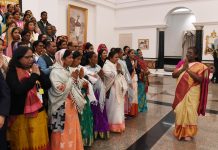
Odisha is rising again, and its future rests on the foundations of its people and progress. The blueprint for the next decade must involve women-led growth, world-class education, and the preparation of a tech-savvy, skilled workforce.
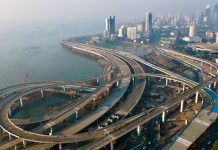
While sports infrastructure and industrial growth are currently world-class, the final leap to becoming a leading power in India requires a shift in mindset. The slumber of the last century must end. Let 2036 be the year the world acknowledges that Odisha has returned with unstoppable momentum.
Let this be the decade where Odia Asmita (Odia Pride) is reflected in every disciplined and dedicated citizen. It is time to build a state where the poverty of the past is replaced by the prosperity of the ancestors. Odisha should not just be a state on a map; it should be the “Light of the East” once more.
Vande Utkala Janani.