




























The 2025 reforms were both ambitious and necessary in view of global trade tensions and economic uncertainties. With rising protectionism and competition for foreign investment, India faced the challenge of making its economy more efficient.
The Indian economy is getting stronger every year under the leadership of Prime Minister Narendra Modi. But 2025 marked a significant turning point for the economy, with a series of bold reforms introduced by the NDA government to make the economy more resilient and globally competitive. Policymakers have undertaken a comprehensive approach to address structural inefficiencies, stimulate consumption, attract investment and unlock untapped potential.
The 2025 reforms were both ambitious and necessary in view of global trade tensions and economic uncertainties. With rising protectionism and competition for foreign investment, India faced the challenge of making its economy more efficient with an eye on enhancing its appeal for both domestic and international investors.
Initiatives like income-tax relief and GST restructuring helped strengthen domestic demand, while labour reforms and FDI liberalisation made the business environment more competitive. Energy and financial sector reforms unlocked untapped potential and aimed at attracting global partnerships, ensuring that India could navigate external shocks more effectively. Thus, acting decisively, the government positioned the economy to withstand global volatility, seize new opportunities and assert itself as a stable and attractive hub for investment in an increasingly uncertain world.
The government started on the reform path with a significant overhaul of the income-tax structure in the Union Budget early in 2025. By providing substantial relief to taxpayers at the lower end of the income spectrum, the government aimed to increase disposable income and stimulate domestic consumption. This step not only enhanced purchasing power but also addressed longstanding concerns about inequity in the tax system.
There were steps like incentivising spending among lower- and middle-income households, the government sought to create a ripple effect across sectors dependent on consumer demand, from retail to manufacturing, effectively jumpstarting economic activity in the post-pandemic era.
The government also restructured the Goods and Services Tax (GST). This reform simplified compliance, reduced cascading taxes and aimed to make the indirect tax system more efficient and transparent. Along with these, steps were taken to lower bureaucratic hurdles and ease the burden on businesses, especially small and medium enterprises, the GST reform encouraged entrepreneurship and investment. The streamlined GST framework also showed India’s commitment to creating a business-friendly environment that could compete globally.
In a bid to tap India’s underutilised energy potential, Parliament passed the “Sustainable Harnessing and Advancement of Nuclear Energy for Transforming India (SHANTI) Bill.” By encouraging private investment and international partnerships in the nuclear sector, the legislation aims to diversify India’s energy mix, reduce dependence on fossil fuels, and foster innovation in clean energy technologies. The SHANTI Bill represents a forward-looking approach to energy security, positioning India to meet its growing energy demands while supporting climate action objectives.
The government also replaced the Mahatma Gandhi National Rural Employment Guarantee Act (MNREGA) with the VB G-RAM-G scheme, enhancing India’s job guarantee framework. This reform modernized employment schemes to be more targeted, efficient and aligned with contemporary rural development needs. By improving the delivery of social welfare and integrating skill development with employment opportunities, VB G-RAM-G aims to provide sustainable livelihoods, reduce poverty, and promote economic participation in rural India.
Thus, the reforms of 2025 signify a quick turn towards a more dynamic, efficient and inclusive Indian economy.
But all this has been possible because the government is politically stable with BJP having a majority of seats in the parliament and running reforms with strong support from its allies including the JD(U) and Chandrababu Naidu’s TDP. Critics, who at the beginning of Modi’s third innings had predicted that allies would turn out to be a headache for Prime Minister Narendra Modi have been proved wrong. Allies have not only been supporting the government consistently and without hesitation they have been playing a proactive role in shaping the destiny of the nation under Modi’s leadership.
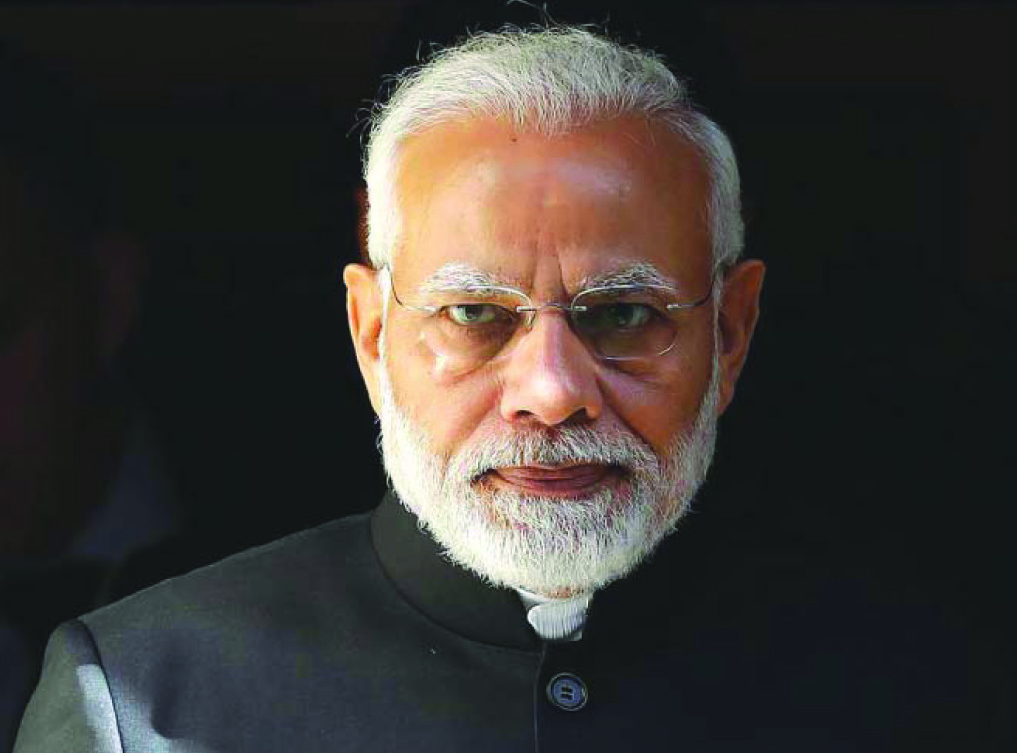
This is primarily because of Modi’s personal image which continues to inspire confidence that India can rise globally with its economy marking consistent growth. India under Modi is both politically and economically strong.