





















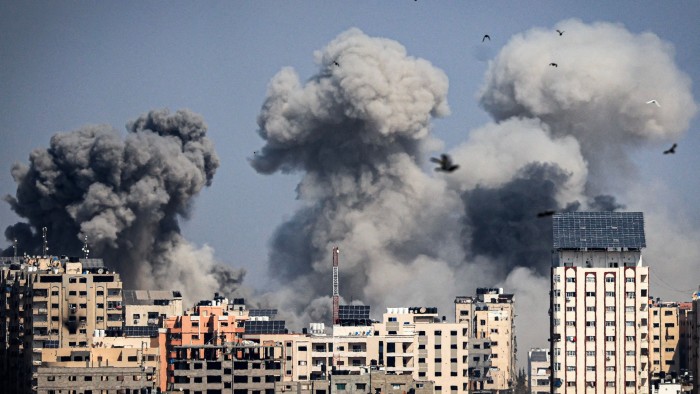
The world may seem to watch in silence, but the consequences are anything but silent. Economic strain, inflationary pressures, disrupted trade, and strategic uncertainty are already unfolding across continents. In such a moment, balanced leadership, sustained diplomacy, and pragmatic cooperation are not choices, but necessities.
The world today may appear calm on the surface, but beneath this quiet lies a deepening economic unease driven by escalating tensions in the Middle East. A region that sits at the heart of global energy supply and strategic balance is once again at a critical juncture, where local conflicts are no longer contained, but are steadily transmitting shocks across the global economy.
Institutions like the United Nations continue to call for restraint and dialogue, but their ability to influence outcomes remains constrained by competing national interests. Recent diplomatic efforts, including faltering United States Iran engagements under the Joe Biden administration, have struggled to produce durable agreements. This widening gap between negotiation and trust reflects a world where dialogue persists, but convergence remains elusive.
At the centre of these tensions lies Iran, a nation with a long civilisational legacy and vast energy reserves. Its prolonged confrontation with the United States and Israel continues to shape regional stability, further intensified by Israel’s April 2026 strikes on Iranian nuclear facilities and Iran’s retaliatory drone barrages. Iran has consistently emphasised the need for relief from economic sanctions and access to its financial assets held abroad, estimated at around 10 billion dollars, as essential conditions for meaningful engagement.
What defines the current phase is not just direct confrontation, but also indirect escalation and fragile diplomacy. Houthi attacks on Red Sea shipping routes, widely seen as aligned with Iranian strategic interests, have disrupted nearly 12 percent of global trade flows since late 2025. The rerouting of vessels around the Cape of Good Hope has increased transit time and added nearly one million dollars per day to shipping costs, clearly illustrating how geopolitical tension translates into economic burden.
In this evolving landscape, countries such as Pakistan emphasise peace and dialogue, though such positioning often reflects strategic calculations, maintaining diplomatic relevance, securing economic support from Western partners, and preserving regional ties, including with Iran. In periods of geopolitical flux, even the language of peace can carry layered economic and diplomatic intent.
The perception of shifting global power further complicates the situation. Historical engagements such as the Vietnam War, Iraq War, and the War in Afghanistan have shaped global perceptions of the United States. While it remains a dominant force, its ability to enforce outcomes unilaterally is increasingly constrained in a multipolar world. Domestic political debates, including those surrounding Donald Trump, add further uncertainty to an already fragile geopolitical environment.
One of the most immediate economic risks lies in the vulnerability of the Strait of Hormuz, through which nearly 21 percent of global oil consumption passes. Even the perception of disruption is enough to trigger volatility. Recent tensions and Iranian naval activity have already pushed Brent crude prices to around 92 dollars per barrel in early April 2026, marking a significant rise since the beginning of the year.
For India, the economic implications of such volatility are particularly pronounced. With nearly 85 percent dependence on oil imports, the country faces heightened exposure to global price fluctuations. The oil import bill is projected to rise to approximately 180 billion dollars for the fiscal year 2026, placing pressure on inflation, fiscal stability, and economic growth.
This rising energy cost cascades across sectors, increasing expenses in transportation, manufacturing, and agriculture. Fertiliser production, dependent on natural gas inputs such as ammonia and urea, has already seen cost increases of around 15 percent, contributing to food inflation nearing 8.5 percent. Industrial indicators reinforce this strain, with Manufacturing and Services Purchasing Managers Index data showing moderation in output and demand. Small and medium enterprises, particularly in states like Odisha, are experiencing margin pressures due to rising diesel, logistics, and power costs.
Fiscal challenges are also intensifying. The current account deficit has widened to approximately 2.5 percent of GDP, while the rupee has weakened against the dollar, increasing the burden of external debt servicing. For regions like Odisha, this translates into higher logistics costs for mineral exports and industrial inputs, potentially affecting key sectors such as steel and pharmaceuticals.
Despite these pressures, India demonstrates resilience through diversification strategies. Expansion of strategic petroleum reserves, increased ethanol blending, green hydrogen initiatives, and trade settlements in local currencies with partners such as the United Arab Emirates and Russia are helping mitigate external shocks and reduce dependency on volatile global markets.
The ripple effects of Middle East instability extend far beyond Asia. China faces manufacturing slowdowns, while European economies including the United Kingdom, France, Germany, and Greece remain highly vulnerable to energy shocks. Germany’s industrial contraction in early 2026 highlights the depth of this exposure. Even Australia experiences indirect pressure through its trade linkages, while Japan continues to balance strategic alliances with its heavy dependence on imported energy.
Investor behaviour reflects growing uncertainty. Reduced risk exposure has led to currency fluctuations, declining foreign direct investment, and slower growth projections. The International Monetary Fund has projected global GDP growth at around 2.7 percent for 2026, lowered due to persistent geopolitical risks and supply chain disruptions.
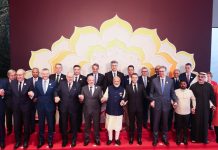
At the same time, global economic alignments are gradually shifting. The expansion of BRICS, now including countries such as Iran, Saudi Arabia, Egypt, Ethiopia, and the United Arab Emirates, signals a move toward diversified economic cooperation. Increasing use of local currencies in trade and efforts to reduce dependence on the US dollar reflect a broader search for resilience in an unpredictable geopolitical landscape.
The emerging world order is neither unipolar nor entirely stable. It is a complex space where cooperation and competition coexist, and where nations such as India, China, and Russia play increasingly significant roles. However, this transition also brings risks. Continued diplomatic failure could prolong instability, push oil prices beyond 100 dollars per barrel, and raise the possibility of stagflation.
The relative quietness of nations today is not an absence of concern, but a reflection of deep global interdependence. Economic priorities, strategic alliances, and domestic compulsions often limit assertive responses. The real question, therefore, is not who will speak, but who will act, and whether collective action is still achievable.
The world may seem to watch in silence, but the consequences are anything but silent. Economic strain, inflationary pressures, disrupted trade, and strategic uncertainty are already unfolding across continents. In such a moment, balanced leadership, sustained diplomacy, and pragmatic cooperation are not choices, but necessities. Without them, the fault lines of geopolitics will not merely divide nations, they will reshape the very foundations of the global economy.