























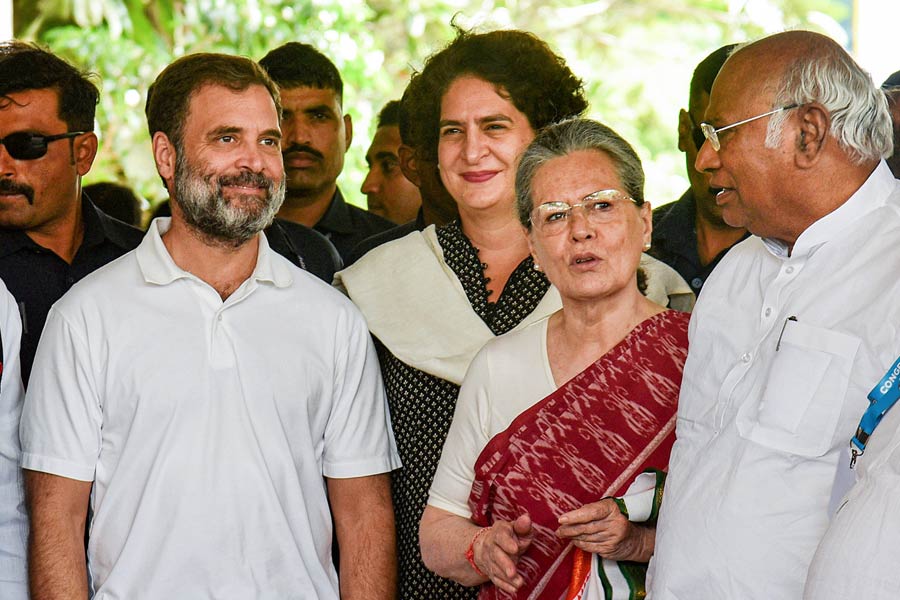
Rahul Gandhi’s resignation after the 2019 defeat saw a moment for a searching second look at organisational reform. After inordinate delays and phases of indecisiveness, the party went on to elect a leader from outside the Gandhi family. Congress Party’s inability to reach triple digits in the 2024 elections, despite the BJP’s electoral retreat, mirrored the organisational ineffectiveness that it faced on the ground.
The Grand Old party of India seems to be going downhill at an alarming speed. Most of its activities have been plagued by indecisiveness. Infighting and working at cross-purposes is common in the party and sometimes there is an unnecessary show of bravado by leaders. What makes the situation more complex for the party is being out of power at the Centre for over a decade and its inability to retain power in states.
Things are being made more difficult for the party by its main rival, the Bharatiya Janata Party, which never loses an opportunity to launch a sustained attack on the Congress, which is often met with an unplanned, half-hearted, and strategically inadequate response. The party has lost three national elections in a row. And if one saw the suggestion of a recovery in 2024, it was despite the party and not because of it.
The BJP fumbled in the 2024 Lok Sabha polls. But the National Democratic Alliance still managed a comfortable majority. There was precious little done by the Congress party to drive home the point that unlike in 2014 and 2019 the BJP could not pull a majority on its own and has, thus, become dependent on allies.
The BJP was quick to review and make course corrections. On the other hand, the Congress demonstrated overconfidence and did not check infighting. In Maharashtra, the Maha Vikas Aghadi was a leaderless alliance while the BJP manoeuvred to set the agenda for the Mahayuti and contest a majority of the seats. Alleging voter list manipulation after the results reflects the Congress party’s organisational weakness.
It is interesting to look at both Congress’s organisational challenges and its inability to drive the political narrative in its favour. The former is plainly visible, becoming more apparent as it starts getting used to being out of power at the national level. The devastating defeat of the party in 2014 and limited recovery in 2019 were an indication of its directionless drift.
Its inability to reach triple digits in the 2024 elections, despite the BJP’s electoral retreat, mirrored the organisational ineffectiveness that it faced on the ground. At the national level, the transfer of the party presidency from Sonia Gandhi to Rahul Gandhi did little to galvanise the party. Rahul Gandhi’s resignation after the 2019 defeat saw a moment for a searching second look at organisational reform. After inordinate delays and phases of indecisiveness, the party went on to elect a leader from outside the Gandhi family.
The election of Mallikarjun Kharge as the party president had its share of political drama. Initially, it appeared as if the new party president was bringing a consensus style to decision-making. But the sustained role of the Gandhi family in this process continues to be a matter of intense debate. There was often a lack of clarity on the role of Rahul Gandhi in the party. While his Bharat Jodo Yatra and Bharat Jodo Nyay Yatra did boost his image, questions about his consistent and continuous involvement in party matters remained.
After the 2024 polls, Rahul Gandhi became the Leader of the Opposition and his sister Priyanka won the Wayanad seat he had vacated. This marked a categorical return of the Gandhi family to the political centre stage. Sitting in the Opposition for over a decade has done little to boost the vigour and enthusiasm of the party organisation. The so-called High Command did not appear to be fully in command. And open rebellion against the party leadership became commonplace.
There have been several instances of this including the Hemanta Biswa Sarma episode, the departure of Jyotiraditya Scindia and Ghulam Nabi Azad, the rebellion by Ashok Gehlot, and most recently, Shashi Tharoor’s stand on issues of importance. Infighting in the state units has also intensified. Sitting in the Opposition, the party has been unable to drive the political narrative. In fits and starts, it takes the initiative, only to soon fall silent and let the BJP steal the spotlight. The future seems dark for the Congress unless the top leadership extricates itself from the clutches of a culture of sycophancy, symbolized by the tendency to equate the party with the Gandhi family.