




















Since 2014, Prime Minister Narendra Modi has redefined India’s foreign policy with clarity, courage, and conviction. Gone are the days when India was a silent observer in global affairs. Today, under Modi’s leadership, India speaks with authority, acts with vision, and connects with both the powers and the people across the world.
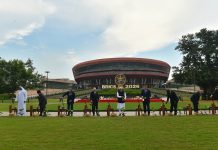
Prime Minister Narendra Modi is back in Delhi after concluding a highly successful five-nation tour that covered Ghana, Trinidad and Tobago, Argentina, Brazil, and Namibia. He also participated in the 17th BRICS Summit held in Rio de Janeiro under Brazil’s chairmanship.
The Prime Minister’s first stop was Ghana which made him the first head of government from India to visit the West African nation in over three decades. In Accra, he held bilateral talks with President John Mahama to review the existing partnership and explore new areas of cooperation in economic development, defence, maritime security, energy, and critical minerals. President Mahama also conferred on PM Modi The Officer of the Order of the Star of Ghana, the country’s highest civilian award.
Modi then travelled to Trinidad and Tobago– the first Prime Ministerial visit since 1999. He met Prime Minister Kamla Persad-Bissessar and addressed the Parliament there. During the visit, India announced that Overseas Citizenship of India (OCI) cards will now be issued to the sixth generation of the Indian diaspora in the Caribbean nation. Modi was also honoured with The Order of the Republic of Trinidad and Tobago, the nation’s highest civilian honour.
The third leg of the tour took the Indian Prime Minister to Argentina , the first standalone bilateral visit by an Indian PM to the South American country in nearly six decades. He held discussions with President Javier Milei to strengthen cooperation in defence, agriculture, mining, energy, trade, and investment. He was also presented with the Key to the City of Buenos Aires by the city’s Chief, Jorge Macri.
In the fourth leg of his visit, Prime Minister Modi attended the 17th BRICS Summit held in Rio de Janeiro, Brazil, from July 6 to 7. He then travelled to Brasília, the capital of Brazil, for a State Visit and held bilateral talks with President Luiz Inácio Lula da Silva. The two leaders discussed ways to expand the Strategic Partnership between India and Brazil in areas such as trade, defence, energy, space, technology, agriculture, health, and people-to-people exchanges. During the visit, President Lula conferred on Prime Minister Modi Brazil’s highest civilian honour, The Grand Collar of the National Order of the Southern Cross.
In the final leg of his tour on July 9, Prime Minister Modi visited Namibia, marking the first visit by an Indian Prime Minister to the country in 27 years. He addressed the Namibian Parliament, where he received a standing ovation from the members. During the visit, President Netumbo Nandi-Ndaitwah conferred upon him The Order of the Most Ancient Welwitschia Mirabilis, Namibia’s highest civilian honour.
The tour has further cemented Prime Minister Narendra Modi’s position as one of the top leaders of the world who is striving hard to strengthen democratic values across the globe by advocating equal rights for every nation. As a result of his efforts many countries, which were earlier deprived of the opportunity to make their voice heard, are now getting the respect due to them. Modi’s contribution to the democratization of the world order will always be remembered.
The truth is that since 2014, Prime Minister Narendra Modi has redefined India’s foreign policy with clarity, courage, and conviction. Gone are the days when India was a silent observer in global affairs. Today, under Modi’s leadership, India speaks with authority, acts with vision, and connects with both the powers and the people across the world.
India’s foreign policy is no longer limited to traditional allies. It is global, inclusive, and assertively strategic. Before 2014, Indian foreign policy largely revolved around maintaining regional balance and reacting to global developments. Modi transformed this passive approach into an active global engagement model. His foreign policy is anchored in five pillars: strategic autonomy, economic diplomacy, cultural connect, diaspora engagement, and global leadership.
Modi has visited over 70 countries, held bilateral talks with the most powerful leaders, and personally championed India’s interests on platforms such as the G20, BRICS, Quad, SCO, and UN. His personal diplomacy — firm handshakes, first-name basis friendships, and cultural symbolism — has given India a new brand of confidence on the world stage.