




























India has a particularly important role. Having hosted the New Delhi Summit and led the 2026 chair ship, India can act as the architect, facilitator and catalyst of implementation. But India should not become the executor of every BRICS commitment.
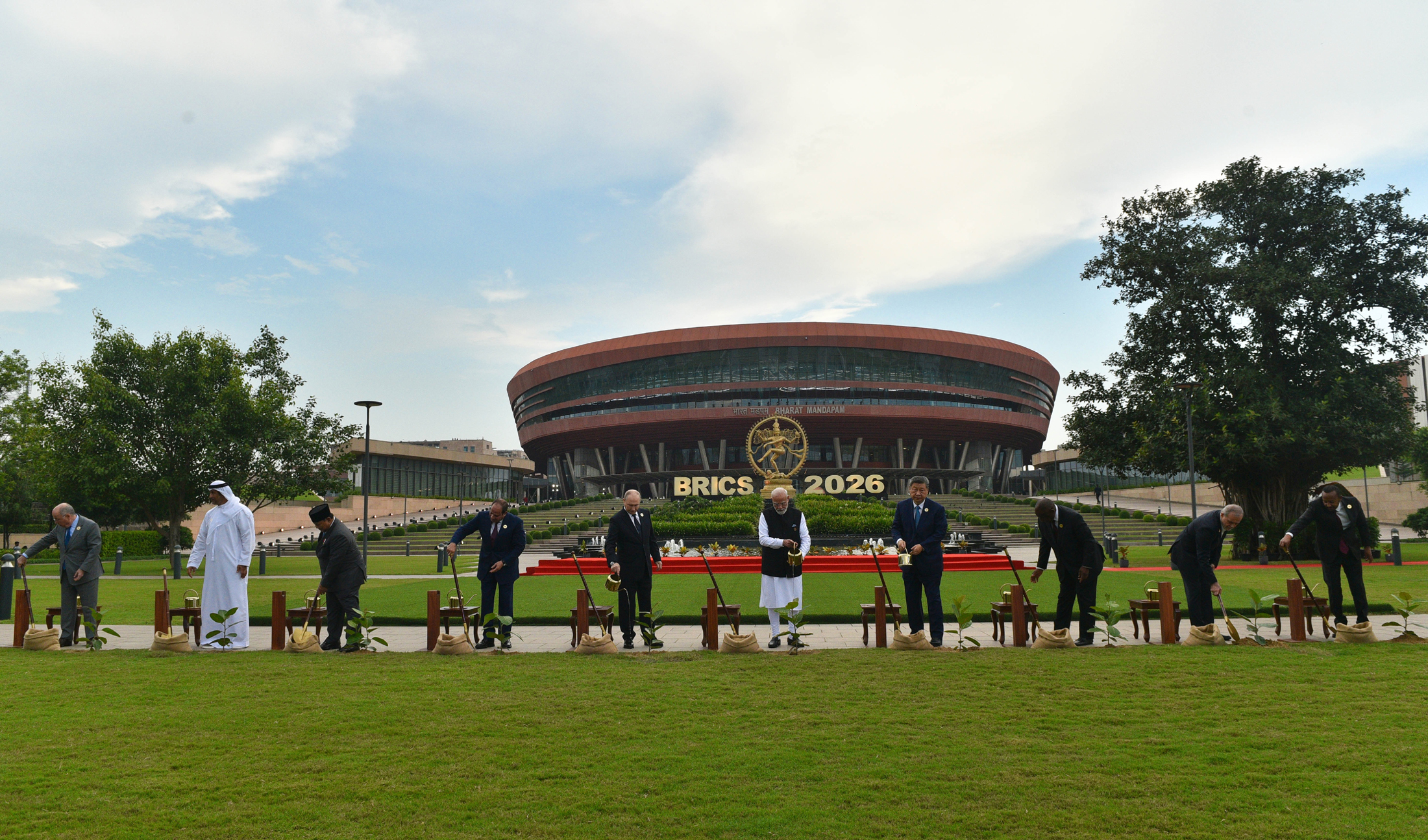
The 18th BRICS Summit in New Delhi concluded with the adoption of the New Delhi Declaration: Building for Resilience, Innovation, Cooperation and Sustainability. Its 140 paragraphs address an extraordinary range of issues, from global governance, peace and security, trade and finance to health, agriculture, technology, energy, climate, education, culture and people-to-people cooperation. Yet the real significance of the summit will not ultimately be measured by the breadth of the Declaration, but by what happens after it.
A declaration creates expectations; implementation creates credibility.
The Declaration is a political commitment, not a self-executing law. Between an agreed paragraph and a benefit reaching a farmer, student, researcher, entrepreneur, patient or community lies an essential chain: identifying the beneficiary, assigning responsibility, preparing an action plan, mobilising resources, implementing the programme, monitoring progress and reporting results. Without this chain, even an ambitious declaration can remain largely aspirational.
BRICS should therefore shift its attention from what has been agreed to what can be delivered.
A practical first step would be to prepare a BRICS Declaration Implementation Matrix for every actionable commitment. It could record nine essentials: the objective, beneficiary, initiating country or countries, responsible institution, partner countries, resources required, timeline, measurable outcome and monitoring mechanism. This would transform the Declaration from a diplomatic text into an implementation framework.
Not all 140 paragraphs, however, have the same implementation potential. Some can produce results relatively quickly through existing institutions and programmes. Agriculture and food security, health, science and technology, education and skills, culture, tourism and youth cooperation are examples. Digital public infrastructure, MSMEs and startups, transport, climate and biodiversity cooperation can also generate practical programmes, although they may require greater coordination.
Other areas are more complex. Energy, critical minerals, trade, investment and financial cooperation involve significant economic and regulatory interests. Artificial intelligence and other advanced technologies require agreement on standards, security, ethics and intellectual property. Global governance reform and geopolitical questions are still more difficult because they depend on negotiations extending beyond BRICS itself.
This suggests a progressive implementation principle.
A student sitting for an examination normally secures the easier marks before devoting greater time to difficult questions. BRICS could adopt a similar logic. It should begin with commitments that are technically feasible, institutionally ready and capable of producing visible benefits. Successful early implementation would build confidence and institutional experience. More complicated commitments could then be pursued with greater determination.
This is not an argument for postponing difficult questions. It is an argument for starting where delivery is possible while continuing to negotiate where delivery is difficult.
The principle is simple: specific benefit should generate specific responsibility; collective benefit should generate collective responsibility.
This distinction matters because BRICS is not a supranational authority. Its members remain sovereign states. BRICS has mechanisms for intergovernmental coordination and follow-up, but these cannot command national governments to implement commitments. Delivery must therefore combine national ownership with collective BRICS support.
India has a particularly important role in this process. Having hosted the New Delhi Summit and led the 2026 chair ship, India can act as the architect, facilitator and catalyst of implementation. But India should not become the executor of every BRICS commitment. Responsibility should rest with the countries and institutions possessing the relevant expertise, resources and mandates.
The proposed BRICS Continuity and Implementation Mechanism is important in this context. The annual rotation of the chairship gives BRICS political energy, but it can also create discontinuity. An initiative launched under one presidency should not lose momentum when another assumes the chair. Stronger continuity through the Troika and systematic follow-up can help preserve institutional memory and ensure that commitments survive changes in leadership.
The BRICS-NDB Knowledge Portal, launched under India’s chairship, offers a practical illustration of this approach. It is intended to consolidate and share knowledge and good practices from BRICS Working Groups and New Development Bank operations, while being developed with successive BRICS presidencies. Such institutional memory can help convert experience into reusable knowledge and support continuity across presidencies.
The New Development Bank can similarly provide an important bridge where commitments require development financing. Infrastructure and sustainable-development objectives become more meaningful when connected with project preparation, financing and implementation capacity. The NDB cannot implement every BRICS commitment, but where its mandate is relevant, it can serve as an important delivery channel.
The same principle should apply to science and technology. Cooperation should move beyond meetings and declarations towards joint research, researcher exchanges, shared platforms, pilot projects, technology transfer and appropriate funding mechanisms. The test should not be how many meetings were held, but what those meetings produced.
This brings accountability to the centre of the discussion.
BRICS should consider placing an Annual Implementation Report or Scorecard before every summit. Each actionable commitment could be classified as completed, on track, delayed, awaiting national action or requiring further negotiation. Such a system would make continuity measurable and allow leaders to review not merely what was promised, but what was accomplished.
The indicators should focus on outcomes. The number of meetings, workshops and memoranda may demonstrate diplomatic activity, but they do not necessarily demonstrate delivery. Stronger indicators would include completed joint projects, researchers exchanged, enterprises supported, financing mobilised, technologies transferred, infrastructure created and communities benefiting from cooperation.
The ultimate objective should be beneficiary-led but BRICS-supported implementation.
This is also where the larger significance of BRICS lies. The grouping seeks greater voice and representation for emerging markets and developing countries in global governance. But its credibility in advocating a more effective multilateral order will depend partly on its ability to demonstrate effective multilateralism within its own framework.
If BRICS can show that diverse sovereign countries can agree on priorities, assign responsibility, mobilise resources, maintain continuity and measure results, it will offer more than another summit declaration. It will offer a working model of cooperative governance.
The New Delhi Declaration should therefore not be treated as the final product of the 18th Summit. It should be treated as its implementation agenda.
Every actionable paragraph should now invite five simple questions: Who will benefit? Who will act? What resources are required? By when? Who will report the result?
That is how diplomatic intent becomes public value, and political commitment becomes institutional credibility.
The summit is over. The real work has only begun.