



























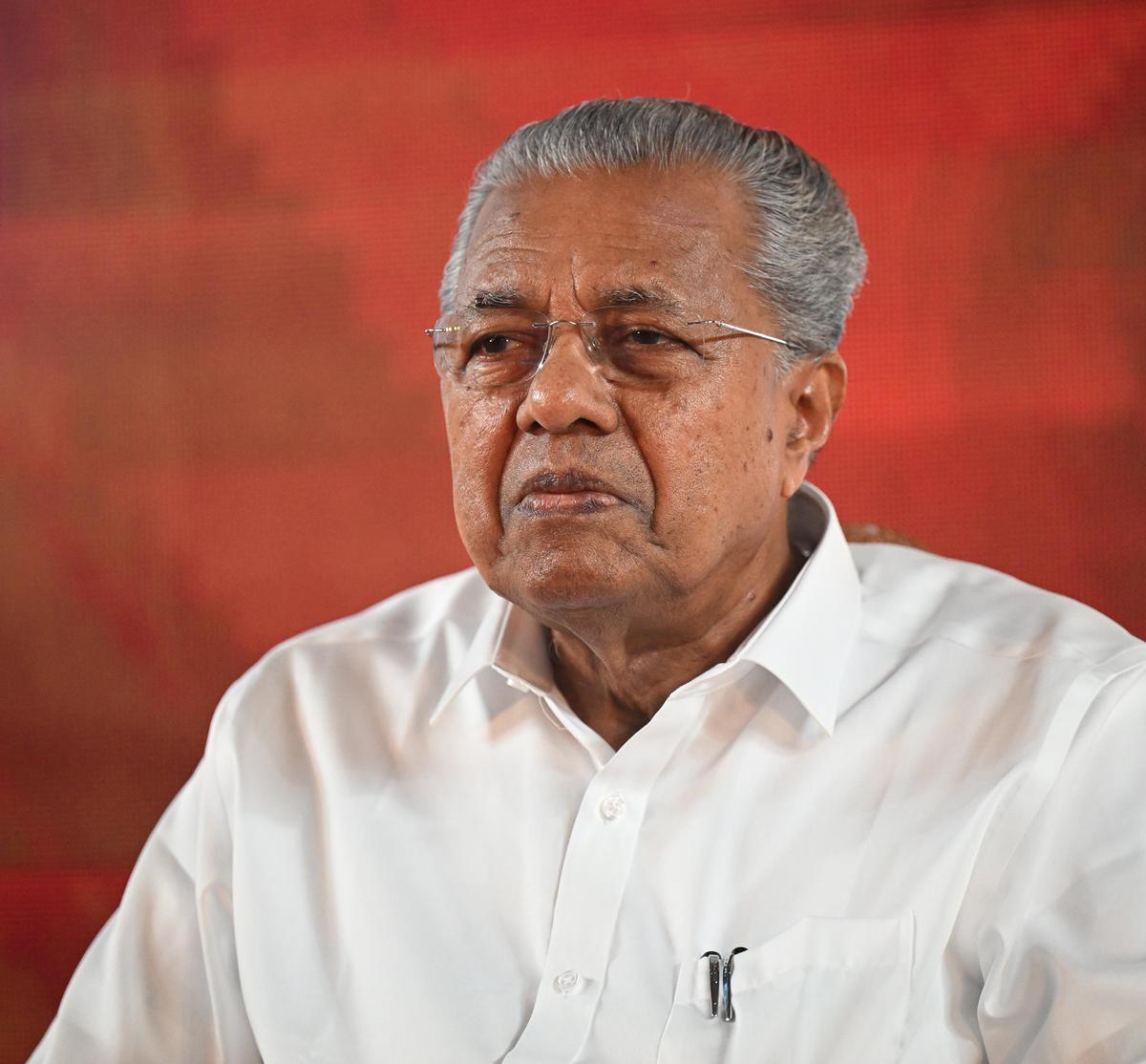
The Legislative Assembly election in Keralam can be interpreted as referendum on ‘Pinarayism’ – a governance model associated with strong centralised leadership, welfare expansion, and infrastructure push. The verdict suggests that this model, while electorally successful in 2021, failed to retain voter confidence in 2026.
The Congress-led United Democratic Front (UDF) has delivered a resounding verdict in the Keralam Assembly elections 2026, securing a record 102 seats – its best performance since 1980 – while the CPI(M)-led Left Democratic Front (LDF) has been reduced to just 35 seats, bringing an end to a decade-long rule under Pinarayi Vijayan.
With Election Commission of India figures confirming a clear winner, the scale of the mandate reflects not merely anti-incumbency but a deeper structural shift in Keralam’s political landscape.
The state has a long, almost predictable pattern, where power alternates between the LDF and UDF every five years. Back in 2021, the Left front led by Pinarayi Vijayan broke that pattern and came back to power. And at the time, it felt like Kerala had moved beyond its strict anti-incumbency rhythm.
So, from the surface, 2026 only seems to have reset that system. This isn’t just a routine correction. Because for LDF, this wasn’t a narrow loss, it was almost a collapse. The LDF has fallen from 99 seats in 2021 to just 35. The CPI(M) itself has dropped to 26 seats, down from 62. That’s its lowest tally in years. Thirteen ministers have lost. Strongholds have flipped. And even in Dharmadam, a seat that rarely raises questions, Pinarayi Vijayan looked vulnerable for a while.
The UDF’s surge was powered by a dominant performance from the Congress and key allies such as the Indian Union Muslim League. Senior leader P K Kunhalikutty registered the highest victory margin of over 85,000 votes, underscoring the coalition’s sweeping appeal across the state. IUML’s first-ever female MLA, Fathima Thahiliya, emerged as a ‘giant killer’ in Perambra, defeating senior CPI(M) leader T P Ramakrishnan – marking a rare non-LDF victory in the constituency in five decades. The UDF secured near-total dominance, with only isolated resistance in parts of Thrissur, Kannur, Kollam and Thiruvananthapuram.
The Bharatiya Janata Party (BJP), meanwhile, managed notable breakthroughs, with victories by Rajeev Chandrasekhar (Nemom), V Muraleedharan (Kazhakkootam) and B B Gopakumar (Chathannur in Kollam) marking its first meaningful gains since 2016.
However, beyond the headline numbers, the election is increasingly being interpreted as a referendum on ‘Pinarayism’ – a governance model associated with strong centralised leadership, welfare expansion, and infrastructure push. The verdict suggests that this model, while electorally successful in 2021, failed to retain voter confidence in 2026.
The LDF’s defeat has exposed cracks in its administrative narrative. Despite showcasing major projects such as Vizhinjam Port, GAIL pipeline rollout, healthcare expansion, and infrastructure development, these achievements did not translate into electoral gains. Instead, concerns over fiscal stress, delayed welfare disbursement, and rising cost of living appear to have weighed heavily on voters.
Even in symbolic terms, the election delivered shocks. Pinarayi Vijayan himself faced a tense contest in Dharmadam, underlining the scale of voter churn. Several high-profile ministers lost, signalling a broader erosion of confidence in the ruling regime.
A critical factor behind the LDF’s setback was internal dissent within the CPI(M). Rebel candidates not only dented official LDF candidates but also exposed organisational fissures. This undercurrent of dissatisfaction weakened booth-level mobilisation – traditionally a stronghold of the Left. Cadre drift, muted enthusiasm, and localised rebellions cumulatively eroded the party’s grassroots machinery.
In contrast, the UDF appears to have executed a highly effective social coalition strategy. Backed strongly by the IUML and Christian-backed Kerala Congress factions, the front consolidated minority and community votes with remarkable efficiency. The IUML’s near-perfect strike rate and the Congress’s resurgence indicate a recalibrated alliance framework that successfully countered both LDF governance claims and the BJP’s expansion attempts.
Despite efforts to broaden its base, the BJP’s gains remained limited. Its outreach to Christian communities and attempts at majority consolidation did not translate into a wider electoral breakthrough.
Political analysts earlier warned of an impending collapse in the LDF’s public standing. In a sharply worded critique, they questioned governance, law and order, and what they described as an increasingly disconnected leadership. They indicated that public discontent had reached subterranean levels and only required a trigger to erupt electorally. They were particularly critical of perceived administrative arrogance, alleged corruption, and weakening institutional control — issues that now appear to have resonated with voters. They observed that Keralam’s electorate is ‘highly individualistic’ and not bound by political or community diktats. It finds validation in the verdict, which cut across traditional voting patterns.
A key takeaway from the results is the widening gap between macro-level development narratives and ground-level voter perception. While the LDF highlighted infrastructure and welfare achievements, voters appear to have prioritised everyday economic concerns — debt, inflation, and livelihood stress. This disconnect proved decisive. The election outcome suggests that governance credibility today hinges not just on project execution but on perceived impact in daily life.
The verdict also elevates V D Satheesan as the central architect of the UDF’s resurgence. His leadership, marked by organisational discipline and strategic outreach, successfully unified the opposition and converted public dissatisfaction into a sweeping mandate.
For the LDF, the defeat raises fundamental questions — not just for M V Govindan and the state leadership, but also for the CPI(M)’s national party status. With a diminishing footprint across the country, the loss of Keralam as a governing base carries wider implications.
As the state prepares for a new political phase, one message stands out with clarity: governance must translate into lived experience. Keralam’s voters have spoken: governance must deliver beyond rhetoric.