
























The most efficient management of reservoirs in Ganjam district could not have prevented flooding on such a scale when an overwhelming volume of rainwater entered the river systems. Water was released from the Dams, in accordance with established procedures and reservoir safety requirements.
The devastating floods that battered several parts of Ganjam district following Cyclone Arnab have triggered a political storm, with the ruling Bharatiya Janata Party (BJP) and the Opposition Biju Janata Dal (BJD) and Congress engaged in a fierce battle of allegations and counter-allegations. What began as a natural calamity has now evolved into a major political controversy, raising uncomfortable questions about dam management, disaster preparedness, administrative accountability and the delivery of relief.
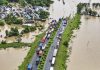
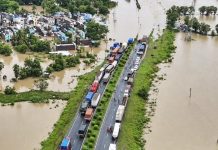
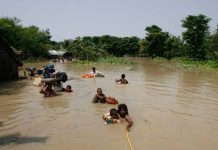
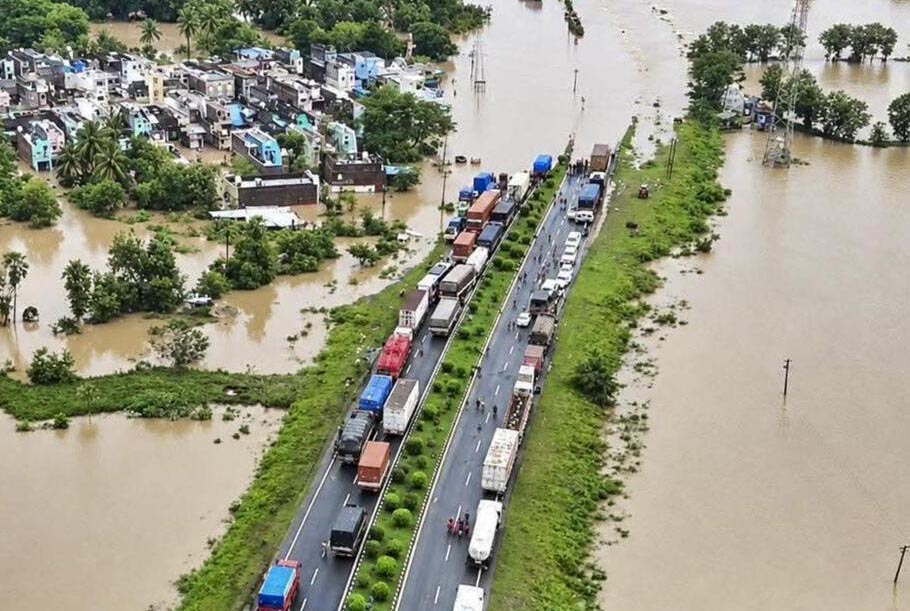
The floods affected large parts of the district, including Bhanjanagar, Sorada, Aska, Sheragada, Hinjili and Purushottampur, leaving thousands of families distressed. Homes, agricultural fields, roads and other infrastructure suffered extensive damage. The misery of the affected people was compounded by complaints of inadequate relief, delayed assistance and administrative apathy. Public anger was also directed at some BJP legislators, with residents questioning their accessibility and the government’s response to the crisis.
For the Opposition, the disaster has provided an opportunity to question the BJP government’s administrative competence. The BJD and Congress have alleged that the scale of devastation cannot be attributed to rainfall alone and that improper management of reservoirs, inadequate advance planning and delayed response aggravated the situation. The BJP, however, has rejected these allegations, maintaining that the unprecedented intensity of rainfall overwhelmed the river systems and that the dams were operated according to established protocols.
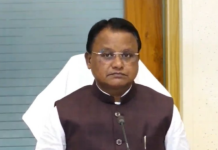
The controversy acquired a new dimension when BJD president and Leader of Opposition Naveen Patnaik visited the flood-affected areas and interacted with distressed residents. His visit to Hinjili, Sheragada, Aska and Sorada on November 7 was followed by a strongly worded letter to Chief Minister Mohan Charan Majhi.
Patnaik described the floods as a man-made crisis, alleging that administrative negligence had compounded the impact of the natural calamity. He questioned why adequate precautions were not taken despite advance weather warnings from the India Meteorological Department (IMD). He also raised questions about the timing of water releases from dams, arguing that releasing water after heavy rainfall aggravated the flooding in downstream areas.
The Congress has also joined the criticism, questioning its preparedness and response. Thus, the flood has provided the Opposition with a common political platform to challenge the BJP government’s disaster management.
Perhaps the most uncomfortable situation emerged after the viral video circulated in social media by the former Chief Secretary and former Principal Secretary of the Water Resources Department, Suresh Chandra Mohapatra. In the video message, Mohapatra questioned the management of water in the reservoirs and highlighted what he considered shortcomings in the functioning of the irrigation and water resources administration. He also raised concerns about the government’s response to the flood and the subsequent relief operations.
It assumed significance because he is not merely a political critic. Having served at the highest levels of the state administration, including in the Water Resources Department, his observations carry administrative weight.
Although his views do not by themselves establish that reservoir mismanagement caused the floods, they have strengthened the Opposition’s demand for a technical examination of the government’s decisions. The government can dismiss political allegations as partisan criticism, but it cannot afford to ignore questions raised by a former senior administrator.
The BJP government has strongly defended its handling of the situation. Chief Secretary Anu Garg, addressing the media, attributed the floods primarily to unprecedented rainfall and rejected allegations of improper dam management. She pointed out that Ganjam experienced extraordinary rainfall over three consecutive days. Patrapur block alone recorded 546 mm of rainfall in a single day. The rainfall following Cyclone Arnab was reportedly around 65 per cent higher than that associated with Cyclone Phailin in 2013.
The Chief Secretary also explained that the combined catchment area of the Rushikulya and Bahuda river systems is approximately 9,800 square kilometres, while only around 880 square kilometres drain into reservoirs. In other words, nearly 90 per cent of the catchment contributes water directly to the river systems, beyond the control of reservoir operations.
The government’s argument is that even the most efficient management of reservoirs could not have prevented flooding on such a scale when an overwhelming volume of rainwater entered the river systems. It has maintained that water was released in phases in accordance with established procedures and reservoir safety requirements.
Revenue and Disaster Management Minister Suresh Pujari has also defended the government, arguing that the administration made preparations based on available weather forecasts, but the actual rainfall far exceeded expectations.
These explanations have technical merit and cannot simply be brushed aside. However, they do not automatically settle the question of whether the administration did everything possible to minimise the damage.
The political confrontation took another turn when Minister Suresh Pujari shifted the focus to the previous BJD government. He questioned why the BJD, during its 24 years in power, had failed to develop a permanent solution to recurring floods in the region. Pujari particularly raised the absence of a major dam on the Rushikulya river, arguing that the previous government had failed to take necessary long-term measures to control floods. Had adequate infrastructure been developed during the BJD regime, he suggested, the present situation could have been different.
However, the Opposition has rejected this argument, describing it as an attempt to divert attention from the immediate crisis. The BJD maintains that its government had developed a globally recognised disaster-management framework, which earned appreciation from the United Nations. It has also invoked the appreciation received by Naveen Patnaik’s government from Union Home Minister Amit Shah in Parliament for Odisha’s disaster-management achievements.
Beyond the political exchanges, the most important issue remains the condition of the people who have lost their homes, crops, livestock and sources of livelihood.
For a family whose house has been damaged, a farmer whose standing crops have been washed away or a small trader whose shop has been destroyed, the debate over which political party is responsible offers little immediate comfort. What matters is whether compensation reaches them, whether damaged roads and irrigation infrastructures are restored and whether they receive adequate assistance to restart their lives.
Public anger over relief distribution and complaints against local representatives deserve serious attention. Relief cannot be measured merely by the number of press conferences held, ministers deputed or announcements made. Its effectiveness must be judged by whether assistance reaches the last affected household in time.
The government must ensure transparent damage assessments, prompt compensation, adequate food and drinking water supplies, restoration of essential services and special assistance to farmers, small traders and vulnerable families. It must also ensure that political affiliation does not determine access to relief.
The Ganjam floods have exposed a larger governance challenge. A credible inquiry should examine rainfall forecasts and actual rainfall patterns, reservoir levels before and during the cyclone, the timing and volume of water released through dam gates, downstream river levels, warning systems, drainage capacity and the coordination between the Water Resources Department and district administration.
The government should make relevant reservoir-operation data and flood-management records available for public scrutiny. If there were lapses, responsibility must be fixed. Equally, if the records establish that the dams were operated according to prescribed procedures and that the extraordinary rainfall was the principal cause, the government should place the evidence.
For the people of Ganjam, the question is not whether the BJP, Congress or the BJD wins the political argument. It is whether the state can ensure that such devastation does not recur and that those who have suffered are helped to rebuild their lives. Nature may trigger a disaster, but preparedness, governance and accountability determine the extent of human suffering.