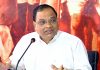





















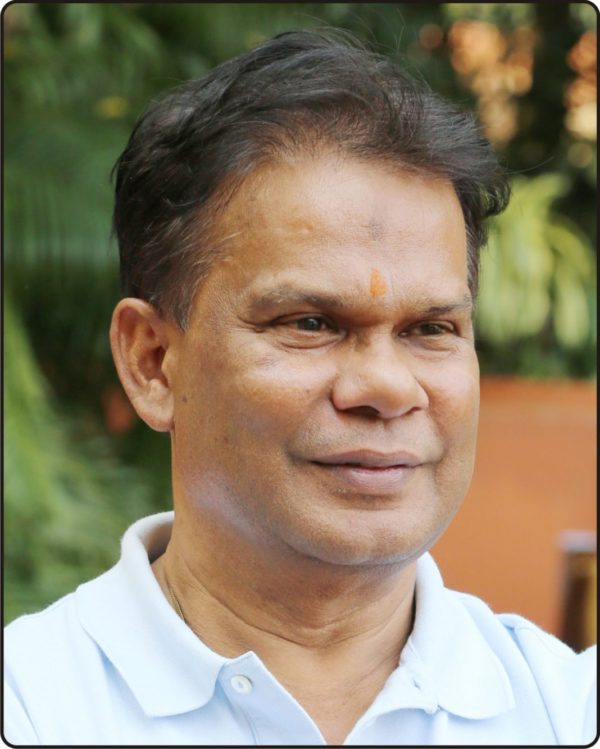
Dilip Ray Elected to Rajya Sabha by Deceiving Naveen Patnaik Once More, a Repeat of 2002!
After 22 years, Dilip has again outsmarted Naveen, sparking discussions in political circles. The Rajya Sabha election results have surprised all political parties. Cross-voting was expected, but the extent of cross-voting that occurred, is being discussed as unprecedented in Odisha’s political history.
From the day the Rajya Sabha elections were announced, it was anticipated that Dilip Ray would be a candidate. However, the suspense was whether he would be an official party candidate or an independent. On the day of candidate announcement, it was revealed that Dilip would contest as an independent candidate. Immediately after this, BJP President Manmohan Samal declared that the BJP would support Dilip.
One thing is clear after Dilip’s victory: the BJP and Dilip Ray had prepared the master plan for this political conspiracy many months in advance. Therefore, the cross-voting that happened was not a plan hatched in a single day.
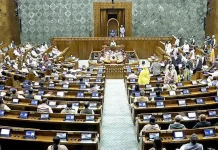
Four Rajya Sabha seats had fallen vacant. Considering the strength of the Odisha Legislative Assembly, each Rajya Sabha candidate required the support of 30 MLAs. Accordingly, it was certain that two candidates from the BJP ticket and one from the BJD ticket would win the elections.
After 24 long years, the Biju Janata Dal was removed from power in Odisha, and the BJP formed the government. The BJP won 78 seats, achieving an absolute majority. Three independent MLAs also extended support to the BJP. A few months after the election, following the untimely death of the BJD MLA from Nuapada, a by-election was held there. It was expected that the BJD would retain its seat in the by-election. BJD supremo Naveen Patnaik himself campaigned extensively. But the result was the opposite. The BJD slipped to third place. This was discussed in Odisha as a severe political blow to the BJD and its supremo, Naveen Patnaik.
In 2026, four Rajya Sabha seats fell vacant in Odisha. The terms of Mamata Mahanta, Sujit Kumar, Niranjan Bishi, and Munna Khan had ended. Originally, these four seats were with the BJD. However, after the change in power in the 2024 elections, Mamata Mahanta and Sujit Kumar resigned from the BJD and joined the BJP. Later, they were re-elected to the Rajya Sabha on BJP tickets. Therefore, for the 2026 Rajya Sabha elections, the BJP announced the names of Manmohan Samal and Sujit Kumar. The BJP supported independent candidate Dilip Ray. BJD supremo Naveen Patnaik announced Santrupt Mishra as the party’s candidate. The Congress did not have the required numbers. Hence, the Congress announced it would support a consensus opposition candidate if the BJD fielded one. Accordingly, BJD supremo Naveen Patnaik announced the name of Dr. Datteshwar Hota as the consensus candidate. Although State Congress President Bhakta Charan Das supported this, many among the party’s 14 MLAs opposed the decision. Among them, Ramesh Jena, Dasharathi Gamang, and Sofia Firdos went against this decision and cross-voted.
After the 2024 elections, the BJD had 51 MLAs. After losing the Nuapada seat, the number was 50. A few days prior, President Naveen Patnaik had suspended Aravind Mahapatra and Sanatan Mahakud from the party for anti-party activities. Thus, the number reached 48. The number required for one Rajya Sabha seat was 30. So, they had 18 surplus MLAs. Then there were 14 MLAs from Congress. If the BJD’s 18 MLAs joined with the sole CPM MLA Laxman Munda, the number would have been 35. Therefore, Datteshwar Hota’s victory seemed almost certain. However, the fear of horse-trading was extremely high in this election.
In the end, besides Aravind Mahapatra and Sanatan Mahakud, BJD MLAs Nabakishor Mallick, Devi Ranjan Tripathy, Souvik Biswal, Ramakant Bhoi, Subhashini Jena, and Chakramani Kanhar ignored the BJD whip and voted for Dilip Ray. This is being discussed in political circles as a severe blow to BJD supremo Naveen Patnaik.
Dilip Ray played a key role in the formation of the Biju Janata Dal. He was a principal architect of non-Congress politics in Odisha. He was a close follower of Biju Patnaik. With Biju’s blessings, he became the Industries Minister in the state and also a Minister at the Centre. Biju’s dream was to establish a regional party in Odisha. He had tasted failure earlier by forming the Utkal Congress. Therefore, after his demise, the Biju Janata Dal was formed in his name. His son, Naveen Patnaik, became the founding president of this party.
The Biju Janata Dal was established in 1997. In 2000, the party formed a coalition government in Odisha with the BJP. Naveen Patnaik became Chief Minister, and Dilip Ray became a Minister at the Centre. Everything was going well. In a twist of political events in 2002, Dilip Ray was suddenly removed from the Union Council of Ministers and the primary membership of the BJD. He was removed from the NDA ministry on the recommendation of the party supremo, Naveen Patnaik. This mystery remains unsolved to this day.
A few months after this, Rajya Sabha elections were held in Odisha. Dilip Ray was a sitting Rajya Sabha MP. His term had ended. It was then expected that Dilip would not contest further, as the BJD was unlikely to give him a ticket. All speculations ended. Dilip Ray filed his nomination as an independent candidate. At that time, the BJD had 38 MLAs, the BJP had 28, and the Congress had 26. During that time, Rajya Sabha elections were conducted through secret ballot. Dilip Ray took full advantage of this and got elected to the Rajya Sabha by deceiving Naveen Patnaik.
As a result of this horse-trading, Naveen suspended four MLAs from the party at that time. Allegations of horse-trading in voting continued across the country. Eventually, the secret ballot system was abolished, and the open ballot system was introduced.
Therefore, it was expected that there would be no horse-trading in this Rajya Sabha election, and that it would be a fair and transparent election. It was thought that crossing the electoral hurdle would be difficult for Dilip Ray. But once again, Dilip deceived Naveen, and with multiple cross-votes from the BJD, he secured a Rajya Sabha seat.