


















Ever since BJP assumed power in the state, Odisha has seen the launch of a flurry of pro-people schemes. While the major thrust has been on the development of the economy and the welfare of farmers, youth and women, the needs of senior citizens, especially those belonging to the economically weaker sections, has not been neglected. Development of Puri Jagannath Dham and promoting Odia Asmita has also been taken care of as evident from the budget recently presented by the chief minister in the state assembly. It is a shining example of holistic and all-round growth.
In less than two years of the BJP government led by chief minister Mohan Charan Majhi coming to power Odisha’s economy has undergone an amazing transformation with the government finding enough monetary reserves to launch new schemes and accelerate the implementation of the old ones to ensure the development of the state.
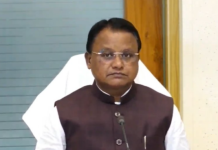
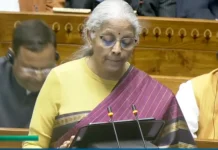
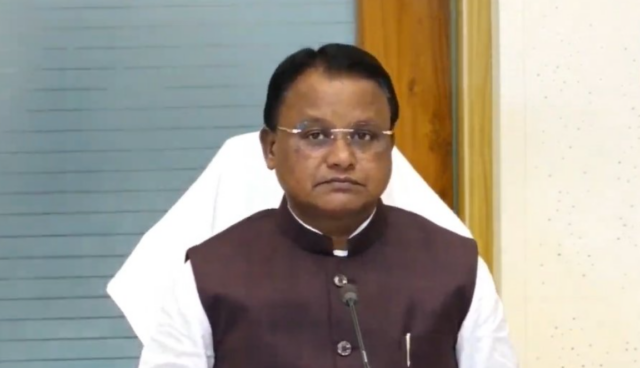
The chief minister has himself been leading these efforts, setting an example before his ministerial colleagues and bureaucrats. He recently presented in the state assembly a Rs.3.10 lakh crore budget with focus on infrastructure development, women empowerment and development of Puri, the focal point of Odia spirituality.
Presenting the budget Majhi announced a “world class” Shree Jagannath Interpretation Centre at Puri at an estimated cost of Rs.1000 crore. The budget also proposed to restore the spiritual glory of Sri Gundicha temple and Emar Mutt among others. The budget is a reflection of the government’s commitment to fulfil the promises it made to the people during the elections.
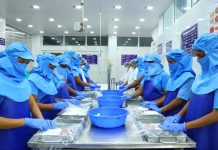
In a move aimed at diversifying the economy of mineral-rich districts and accelerating rural employment, Majhi recently laid the foundation stone for a large apparel manufacturing park in Keonjhar, his home district. The park is projected to create around 1,200 direct and indirect jobs and position the region as a new garment production cluster.
The facility, coming up at Balabhadrapur, is being developed by a leading group as part of its corporate social responsibility programme. Officials said the project aligns with a broader policy
push to transform backward mining belts into hubs of value-added industries and labour-intensive manufacturing.
Officials estimate the unit will produce nearly 2.4 million garments annually once fully operational, supplying major domestic and global brands. The project is expected to prioritise employment for local youth and women, while stimulating ancillary sectors such as logistics, warehousing and supply chain services.
According to chief minister Mohan Majhi the apparel park represents a strategic shift in Odisha’s industrial policy towards inclusive growth. He noted that expanding manufacturing beyond mining and heavy industry would help stabilise incomes in resource-dependent districts
and generate sustainable livelihoods. He expressed confidence that the unit would create new employment opportunities for the youth and the women and strengthen household incomes while bringing Keonjhar into the national apparel value chain.
Keonjhar facility is part of a larger livelihood strategy in Odisha with a similar apparel unit coming up at Tikiri and plans afoot for another in Sambalpur, with a focus on skill training and long-term employability for economically vulnerable communities.
The focus is on building local production ecosystems rather than standalone units. The effort is to create sustainable livelihood platforms that integrate training, employment and community
participation. The project has received land support from the state government and is expected to function as a model for CSR-led industrial development in aspirational districts.
Policymakers view labour-intensive apparel manufacturing as a key lever for absorbing rural workforce migration and strengthening India’s textile export competitiveness. The implementation will be monitored by officials to ensure timely completion and integration
with skill development programmes. Industry analysts note that Odisha’s entry into organised garment manufacturing could complement established textile clusters in southern and western India, helping distribute production geographically while tapping underutilized labour markets.
Development has to be multipronged for the holistic growth of a state and the chief minister is keenly aware of this. He is also a votary of balanced growth keeping the requirements of hitherto neglected districts in mind. Little surprise then that he has been focussing on different areas to take the state forward. Recently he laid the foundation stone for a medical college and hospital in Nabarangpur district. The medical college and hospital, will be set up on over 50 acres of land at Patalguda in the district and will have 420 beds and 100 MBBS seats. The chief minister said after the construction is completed, people won’t have to go outside the district for treatment.
Stating that within 20 months of his assuming power, three medical college hospitals at Jajpur, Kandhamal and Talcher have been made operational, the chief minister said the government had promised to open four more medical college hospitals.
Majhi also inaugurated and laid the foundation stone of 177 development projects worth over Rs.446 crore for the district on the occasion. This includes the inauguration of 112 projects worth Rs.68 crore and laying the foundation stones for 65 projects worth Rs. 378 crore. The projects cover educational institutions, roads, bridges, and anganwadi centres.
Majhi highlighted the government’s focus on development in education, healthcare, agriculture, transportation and women’s empowerment to bring Nabarangpur to the forefront. He assured that despite the district’s distance from the state capital, development will not be hindered, and progress will continue unabated.
The growth of Odisha under chief minister Mohan Majhi is being cited as another example of a double-engine government succeeding in putting a state into national spotlight. Right from education to medical facilities every aspect of growth is being kept in focus.
An equally important and interesting scheme launched by the chief minister aims at facilitating the visits of the poor, widows and the elderly to the 12th century Jagannath temple in Puri at least once in their lifetime. The state government will bear the cost of the visit which aims to enhance the spiritual and cultural well-being of people.
“I launched the Shri Jagannath Darshan Yojana for the people from Nabarangpur. The state government considers the people as the centre of governance, and therefore, it is our highest duty to fulfil their hopes and aspirations,” said Majhi while launching the scheme. He underscored the fact that many times financial constraints or family problems keep the elderly and the economically backward people from realizing their dream of visiting Puri and having a “ darshan” of the Lord.
“To meet their unfulfilled religious desire, we have started this innovative scheme, where the government will take the elderly and widowed women like Shravan Kumar to the shrine with respect and arrange their hassle-free darshan and the consumption of Mahaprasad,” Majhi said.
Stating that the scheme is set to enhance the spiritual and cultural well-being of vulnerable communities, the chief minister said under provisions of the SJDY, senior citizens between the age of 60 and 75 and widows up to 75 years, hailing from economically weaker sections,
will avail the facility of free travel to Puri where they will have the opportunity to visit the Jagannath Temple. The scheme will also provide free of cost ‘Mahaprasad’, along with transportation, accommodation, and food expenses.
The first phase of the initiative is expected to benefit more than 500 devotees from various districts. The scheme, jointly implemented by the departments of tourism and transport, was simultaneously launched from Sambalpur, Bhadrak, Berhampur and Baripada.
According to the tourism department, the scheme aims to benefit 5,000 people in 2025-26 fiscal and 30,000 in 2026-27 financial year. The scheme is to remain effective till 2028-29 fiscal. A total of approximately 1,00,000 beneficiaries will be selected from across the state during the duration of the scheme.
With such schemes Majhi has earned the tag of “people’s chief minister” who is conscious of not only the problems but also the hopes and aspirations of his people.