






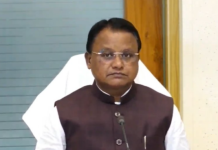













Chief minister Mohan Charan Majhi has kept Odisha steadily on the path of development unleashing a flurry of schemes. Of late his focus has been on farming, irrigation, minerals and industries and, of course, protecting and preserving Odia Asmita. The government, so far, has achieved commendable success on all these fronts.
As state BJP government’s developmental drive continues to yield excellent results chief minister Mohan Charan Majhi seems to be focussing simultaneously on agriculture, mineral-based industries, power and Odia Asmita or pride.
The welfare of farmers has always been uppermost in the mind of the chief minister who recently reaffirmed his government’s commitment to achieving irrigation coverage for over 90 per cent of cultivable land by 2036. The chief minister reiterated his resolve in this regard at the valedictory function of the state-level Pani Panchayat Fortnight-2026 at the Lok Seva Bhawan.
Underscoring the importance of the Pani Panchayat system which has brought about a transformative change in the lives of farmers by ensuring equitable and efficient water distribution he highlighted the fact that the Odisha Pani Panchayat Act, 2002 and subsequent amendments have ensured equal rights and participation of women, fishermen and water users, thus strengthening community-led water governance.
“At present, 40,380 Pani Panchayats are actively managing irrigation across 24.12 lakh hectares of agricultural land in the state. In the next five years, an additional 15 lakh hectares will be brought under irrigation through major, medium and minor irrigation projects, lift and mega lift irrigation schemes and construction of check dams,” he said.
Referring to ongoing projects, Majhi said works such as the Khairibandhan Barrage in Mayurbhanj, Upper Lanth Project in Balangir, Sandul underground pipeline system and Brittanga Irrigation Project in Nayagarh along with several reservoirs and canal systems across the state, are making commendable progress.
Keen to enhance the income of farmers Majhi called upon farmers to adopt crop diversification, including vegetables, fruits and floriculture. With no doubt in his mind that a prosperous Odisha cannot be built without prosperous farmers, he made it clear that his government would do everything possible to implement suitable schemes to enhance farmers’ income and promote climate-resilient agriculture.
The government remains keen on integrating technology into irrigation management to benefit farmers. The introduction of IoT-enabled digital water measurement systems and soil moisture sensing technologies in collaboration with the Institute of Water Management would soon commence in the state. The government has also signed an MoU with Xavier Institute of Management to strengthen the capacity and efficiency of Pani Panchayats.
A pilot project covering 2,567 hectares at Chandpala in Nuapada district has been taken up to demonstrate modern water-use efficiency and community-managed irrigation practices. The government is also working towards providing better market access to farmers and facilitating export of agricultural produce to ensure remunerative prices.
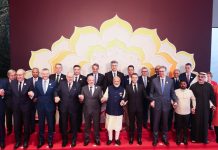
There is an increased thrust on reform driven mineral governance in the state. Recently steel and mines minister Bibhuti Bhushan Jena highlighted this at the National Mineral Chintan Shivir-2026 in Gujarat’s Gandhinagar. He informed that since assuming charge, the state’s BJP government has successfully auctioned eight major mineral blocks which has reinforced investor confidence and accelerated responsible mineral development. Notices inviting tenders have already been issued for 12 additional major mineral blocks, reflecting Odisha’s commitment to systematic, time-bound and transparent mineral resource management.
The meet was organised by the Union Ministry of Mines, during which Jena gave a detailed presentation on Odisha’s recent policy initiatives aimed at strengthening transparency, curbing illegal mining and ensuring efficient and sustainable utilisation of mineral resources. The minister said that implementation of the Odisha Minerals (Prevention of Illegal Mining and Regulation of Trading, Transportation & Storage) Rules, 2025 and the Odisha Minor Mineral Concession Rules 2025, were landmark reforms which would improve regulatory oversight, enhance accountability and streamline mineral block allocation processes.
Apart from showcasing the state’s achievements, Jena placed reform oriented and forward looking suggestions including rationalisation of duties on iron ore fines to reduce economic inefficiencies and improve resource utilisation, strengthening of state public sector undertakings (PSUs) through enhanced allocation of mineral blocks to ensure easier availability of raw materials for small and downstream industries and others. The minister strongly pitched Odisha’s position as a leading contributor to the country’s mineral ecosystem and reflected the state’s strong alignment with the vision of Viksit Bharat-2047.
Power sector is being accorded equal importance by the BJP government with chief secretary Anu Garg recently directing the Tata Power-managed distribution companies (discoms) to focus on achieving “zero fatalities and zero blackouts” through robust and resilient power distribution infrastructure, safety mechanisms, real-time monitoring and strengthened operational discipline.
She reaffirmed the state government’s focus on safety, reliability and improved consumer services and stressed the importance of sustained capital investment in network modernisation, reliability enhancement and adoption of advanced technologies to build a resilient and future-ready power distribution system.
Progress under the smart metering programme was reviewed, with emphasis on transparent billing, improved energy accounting and stronger consumer engagement. The chief secretary also stressed effective implementation of the PM Surya Ghar Muft Bijli Yojana through the ULA model to accelerate rooftop solar adoption and support the clean energy transition. She also laid special emphasis on the use of the Surakhya Kavach App for real-time safety oversight, emergency response and coordinated monitoring of field staff during outages and disaster-related restoration works
Odia Asmita is not merely a campaign slogan for the Majhi government and state BJP leaders, it is an article of faith for them. It was in focus recently with union education minister Dharmendra Pradhan writing to Gujarat chief minister Bhupendra Patel seeking measures for social and educational development of the Odia community residing in the western state, especially in Surat.
Pradhan’s missive highlighted that Gujarat, especially Surat, was home to a significant Odia-speaking population who are immensely contributing to the industrial and social sectors of the state. Therefore, there is an urgent need to provide proper educational facilities in their mother-tongue.
He proposed to increase the number of Odia-medium schools, higher secondary schools and Odia language teaching and training schools in the state for the benefit of the Odia community residing there.
Stating that the National Education Policy (NEP) 2020 under the leadership of Prime Minister Narendra Modi placed strong emphasis on primary education in mother tongue, promotion of Indian languages and accessibility and strengthening of multilingual education, Pradhan stressed that institutional strengthening for the Odia language in Gujarat was necessary.
He said introducing Odia as an optional subject in colleges and universities across Gujarat besides establishing dedicated Odia language departments will provide students language continuity in higher education. “Implementation of NCERT-based Odia curriculum in the state will also bring uniformity in the quality of teaching and ease academic migration for students moving between Gujarat and Odisha,” the Union minister said.
He further proposed introduction of a teacher eligibility test for the Odia language, underlining that it would help address the shortage of qualified Odia teachers at government schools in Gujarat. While Pradhan’s initiative has earned praise from Odias across the state, the Majhi government has, of late, taken a series of steps to preserve and develop Odia language and culture.