

























For the BJP, this is a moment to underline its credentials as a party which elevates people on the basis of their merits and not their rank or pedigree. Thus, even an ordinary karyakarta (party worker) can rise to the top, if he displays potential and impresses the leadership with his work.
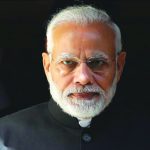
The euphoria over the election of Nitin Nabin as the new and youngest president of Bharatiya Janata Party is yet to subside. The excitement over his elevation to the party’s top post is primarily on account of his track record as an MLA and minister in Bihar and the fact that he is the first millennial to lead the world’s largest party, a fact also underscored by Prime Minister Narendra Modi.
No wonder expectations from him remain high. While he would be expected to impart a fillip to the party’s efforts to strengthen its organisation at all levels, Prime Minister Narendra Modi and Home Minister Amit Shah would hope that Nitin would provide the BJP a solid foothold in south India where it is yet to establish itself as a major political force except in the state of Karnataka.
The elevation of the five-term MLA from Bihar to the top post of the party is in keeping with the functioning of the party high command, which revels in overturning expectations and throwing up surprises. Of late many of the party high command’s decisions have been symbolic and Nitin’s appointment is no exception.
Prime Minister Narendra Modi underscored the fact that the BJP’s 12th president is a “millennial” who represents a generational shift in the party. For the BJP, this is also a moment to underline its credentials as a party which elevates people on the basis of their merits and not their rank or pedigree. Thus, even an ordinary karyakarta ( party worker) can rise to the top if he displays potential and impresses the leadership with his work.
Nabin, the youngest ever president of the world’s largest political party, also faces many challenges, the most daunting of them, perhaps, being the need for him to prove himself worthy of his position.
The road ahead will not be easy for him as some important state elections are approaching. Except Assam, where it is the incumbent, the BJP is faced with states where it has not yet met with the success it desires. It can expand in these states and establish itself only if it crosses the hurdles in the way of achieving this goal.
The party, no doubt, has no dearth of resources. In terms of funds it is far ahead of its rivals in the country. But the bigger challenge is managing the fallout of its ambitions. Beyond the impending state elections, or the Lok Sabha polls in 2029, are larger transitions that the BJP, as the party behind the steering wheel at the Centre, must help the nation navigate. The BJP under Nabin must prepare itself for challenges like census and caste count, delimitation exercise, implementation of women’s reservation in legislatures and simultaneous elections.
As far as elections are concerned the upcoming municipal elections in Bengaluru will also be in Nitin’s crosshairs. This election has become important for the party after the emphatic victory of BJP-Shiv Sena ( Shinder group) in the recent civic polls in Maharashtra with a stellar performance in the prestigious Mumbai corporation. BJP, the dominant partner, bagged the maximum seats. The victory of BJP-Shiv Sena (Shinde) ended the long reign of Sena (Uddhav group) in the Mumbai civic body.
Enthused by this, BJP is now preparing hard to capture the Bengaluru city corporation where elections are due in the next few months. The appointment of RSS ideologue Ram Madhav to oversee the long-delayed elections for Bengaluru city corporation underscores the importance of securing a victory and retaining control over India’s IT capital.
The BJP, which ran a government in Karnataka until being dislodged by the Congress, is leaving little to chance in securing a victory in the maiden Greater Bengaluru Authority (GBA) elections, one of India’s biggest urban centres and economic growth engines.
In November last year, the GBA replaced the Bruhat Bengaluru Mahanagara Palike (BBMP), paving way from one single corporation to five for better management and streamlining civic services in Bengaluru. It increased the number of wards from the earlier 198 to 369 and also has provisions to expand the boundaries of the city corporation from around 800 sq km currently to almost 1,400 sq km to include localities, towns and villages lying in the city’s outer periphery.
As the nerve centre of Karnataka and home to nearly a quarter of the state’s population, Bengaluru remains a top political priority for the BJP and its national leadership. The city accounts for a significant chunk of India’s over $200 billion IT exports, considered a major R&D centre, start-up and aviation hub but has been in the news for all the wrong reasons. All this makes Bengaluru elections crucial for BJP and will test Nitin Nabin’s mettle.